 Skip to content
Percutaneous Discectomy Surgery
Normally, the discs in between the bones (vertebrae) of your spine don’t cause you any problems. And even if they do flare up, it’s often possible to manage disc injuries conservatively with treatment such as physical therapy. However, if you develop a condition such as a herniated disc and the pain doesn’t improve in time, you might benefit from a procedure known as a percutaneous discectomy.
What Is A Percutaneous Discectomy?
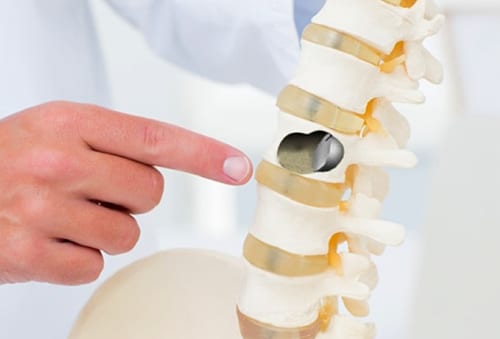
How Is The Procedure Performed?
What Spinal Conditions Can A Percutaneous Discectomy Help With?
A percutaneous discectomy can help manage pain associated with herniated discs and related nerve issues such as sciatica. Nerve pain can be debilitating, and it can affect a patient’s quality of life—if your pain doesn’t cease after six months or so, then surgery might be considered.
When Is A Percutaneous Discectomy Performed?
Non-surgical interventions are usually the first treatment of choice for disc herniations. However, a percutaneous discectomy may be performed if:
- You have a disc herniation
- Conservative treatments like painkillers and physical therapy have not worked
- You are in significant pain, which affects your daily life
- There’s evidence of nerve impingement, e.g. sciatica or radiculopathy
- The herniated disc material is pressing on a nerve root
It may not be the right treatment for patients with large, uncontained disc herniations in the spinal canal. It’s also not always appropriate for patients with stenosis.
To help identify if you’re a candidate for a percutaneous discectomy, your specialist may order imaging such as MRI scans to better visualize the herniation and identify the affected nerve roots. If you’re not a candidate, your specialist can discuss other treatments with you.
Is A Percutaneous Discectomy Safe?
As with any surgical intervention, percutaneous discectomies do carry some risk. The risks are less than with open surgery; however, they include:
- Reaction to anesthetic
- Bleeding
- Nerve irritation
How Long Does It Take To Recover From Surgery?
What If I Don’t Want To Have Percutaneous Discectomy Surgery?
Don’t worry – non-surgical treatments are often successful at treating the symptoms of a disc herniation, including sciatica. The treatments we offer at the Interventional Spine & Surgery Group include:
- Nerve blocks
- Physical therapy and exercise
- Medication
- Steroid injections
There are also other surgical treatments available, depending on your condition, medical history, and symptoms. The best way to find the right treatment for your needs is by contacting a spine specialist.
Contact our spine specialists now to book a consultation or discuss the percutaneous discectomy procedure in more detail.
