 Skip to content
Meniscus Tear
Meniscus Tear Care Near You in New Jersey
A meniscus tear is a common knee injury, but it’s not always obvious that you have an injured knee.
Some people walk around for weeks before realizing their knee pain isn’t just soreness. Others may feel
a pop during a game or a workout and know immediately something is wrong. Either way, getting the
right diagnosis is important to protect your long-term knee health.
At Interventional Spine & Surgery Group, we bring together orthopedic surgeons, pain management
specialists, chiropractors, physical therapists, and neurosurgeons under one roof to evaluate and treat a
variety of knee injuries. We take a conservative approach first, and when surgery is the right answer,
we’re ready for that, too. With on-site imaging and a wide variety of treatments available, our team
prioritizes providing relief right away, so you don’t have to live in pain. Learn more about what a
meniscus tear is and how we diagnose and treat it near you in New Jersey.
Key Takeaways
- The meniscus is a C-shaped piece of cartilage that cushions and stabilizes your knee joint.
- Tears can happen suddenly (acute) or develop gradually through repetitive stress (degenerative).
- Many meniscus tears respond well to non-surgical treatment.
- Surgery may be necessary when your symptoms persist or your tear is severe.
- Interventional Spine & Surgery Group can diagnose and treat meniscus tears and other knee conditions.
What Is a Meniscus?
Your knee has two menisci: the medial meniscus on the inner side and the lateral meniscus on the outer
side. Each one is a wedge-shaped piece of cartilage that sits between the femur (thigh bone) and tibia
(shinbone). They absorb shock, distribute weight across the joint, and help keep the knee stable.
When the meniscus tears, it can’t do its job properly. The result is pain, swelling, and sometimes a knee
that catches, locks, or gives out. Getting the right treatment depends on the tear size, its location, and
its severity.
Common Causes of Meniscus Tears
Meniscus tears often happen in one of two ways. They either result from a sudden injury or from gradual wear over time. Common causes include:
- Twisting or rotating the knee while the foot is planted on the ground
- Sudden pivoting or cutting movements during sports
- Direct contact or impact
- Squatting or lifting heavy loads
- Aging
Acute tears are most common in athletes and those who live an active lifestyle. Degenerative tears are
more likely in patients over 40 because the cartilage has weakened over time.
Risk Factors and Activities That Can Lead to Meniscus Tears
Anyone can tear a meniscus, but some people are at a higher risk than others. The following factors
increase your likelihood of injury:
- Playing contact or high-impact sports like football, basketball, soccer, or skiing
- Jobs that involve frequent kneeling, squatting, or heavy lifting
- Having cartilage that is more brittle or less resilient
- Having previous knee injuries, particularly ACL tears
- Having weak quadriceps or hamstrings that put extra stress on the joint
- Being overweight, which increases the load on the knee
If you have any of these risk factors, it’s important to talk to your doctor about ways to decrease your
risk.
Signs and Symptoms of a Torn Meniscus
Meniscus tear symptoms can vary depending on the size and location of the injury. Some patients
experience immediate pain, while others notice symptoms gradually over a few days. Common
symptoms include:
- Pain along the inner or outer edge of the knee
- Swelling that develops over 24 to 72 hours after injury
- Stiffness and limited range of motion
- A popping sensation at the time of injury
- A feeling that the knee is locking or catching while moving
- Instability or the feeling that your knee is going to give out
You should contact your doctor immediately if your knee is severely swollen, you can’t bear weight, or
the joint feels locked and won’t straighten. These are signs that you may have a major tear, and delaying
treatment can cause further complications.
Diagnosing a Meniscus Tear
At Interventional Spine & Surgery Group, our specialists use a combination of physical examination and
imaging to get a clear picture of what’s happening in your knee.
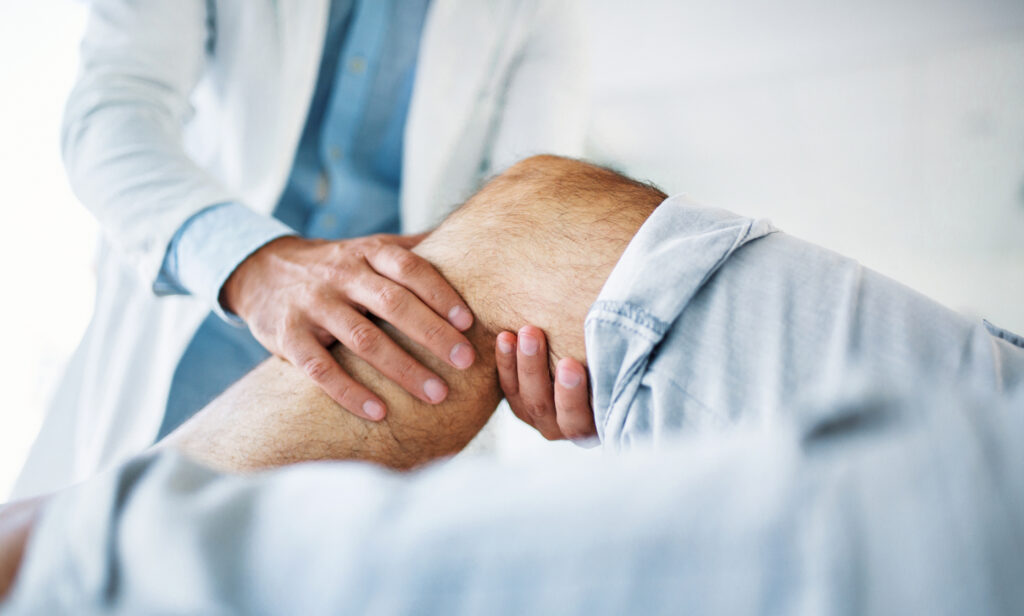
During the physical exam, your doctor will assess your range of motion, joint tenderness, and stability.
Tests like the McMurray test, where the knee is flexed, rotated, and extended, can help identify a
meniscus tear based on your pain response and how your knee moves. From there, we use imaging to
confirm the diagnosis and determine severity:
- X-rays rule out fractures or signs of arthritis
- Magnetic resonance imaging (MRI) helps visualize soft tissue damage and shows tear type, size, and location
- Ultrasound can help assess soft tissues in real time
Together, the exam and imaging give our team what they need to recommend the right treatment and
spare you from unnecessary procedures.
Non-Surgical Treatment Options for Meniscus Tears
Many meniscus tears, especially small tears along the outer edge, can heal on their own without
surgery. Non-surgical treatment focuses on reducing pain and inflammation, restoring range of motion,
and rebuilding strength along the joint. They can include:
- Rest, ice, compression, and elevation (RICE)
- Nonsteroidal anti-inflammatory medications (NSAIDs) to reduce swelling and pain
- Physical therapy to strengthen the quadriceps, hamstrings, and surrounding muscles
- Corticosteroid injections to reduce inflammation for a faster return to activity
- Viscosupplementation (gel injections) to improve lubrication and cushioning in the joint
- Activity modification and bracing to protect the knee during recovery
Conservative care is always our starting point. Many patients see significant improvement within weeks,
depending on tear severity and how quickly they begin treatment.
Surgical Treatment Options for Meniscus Tears
You’ll need surgery if your tear is large, causes your knees to lock, or doesn’t improve with several
months of non-surgical care. Luckily, most meniscus surgeries are minimally invasive. The two main
surgical approaches are:
- Partial meniscectomy: This is the partial removal of the damaged portion of the meniscus. It’s often recommended for complex tears or tears in areas with poor blood supply.
- Meniscus repair: This is when your surgeon sutures the torn tissue back together. This is preferred for tears in the outer part of your meniscus, where there’s more blood supply, especially in younger, active patients.
Both procedures are done arthroscopically through small incisions, which reduces your recovery time
and minimizes muscle damage compared to open surgery. Most patients can go home the same day.
Recovery timelines vary by procedure and patient. With a partial meniscectomy, you can often return to
light activity within four to six weeks and can fully return to sports within three months. Meniscus
repairs have a longer recovery of about four to six months. Your care team will outline a specific rehab
plan based on your procedure and activity goals.
Why Choose Interventional Spine & Surgery Group?
When you come to Interventional Spine & Surgery Group for a torn meniscus, you’re getting a full team,
not just one specialist. Our practice brings together orthopedic surgeons, pain management specialists,
physical therapists, chiropractors, and others who collaborate on complex musculoskeletal cases every day.
We also aim to see patients as soon as possible, helping you get patient-centered care quickly. Our goal is
to provide relief right away, so you don’t have to continue dealing with pain.
Dr. Sean Lager is a board-certified orthopedic surgeon with fellowship training in sports medicine. He has
extensive experience treating acute and degenerative knee injuries, with a preference for minimally invasive
techniques that get patients back to their lives faster. His athletic background gives him a firsthand
understanding of what it means to be sidelined by an injury and what it takes to recover the right way.
At every step, our approach is to start conservatively and escalate only when necessary. We’ll keep you
informed throughout the process, so you can be a true partner in your recovery. We don’t recommend surgery
unless it’s the right answer for you. And when it is, we use the latest techniques to minimize downtime and
maximize your healing.
Find Meniscus Tear Treatment Near You in New Jersey
If you’re dealing with knee pain, swelling, or instability, don’t wait for it to get worse. A meniscus tear
that’s caught early is easier to treat than one that’s been aggravated for months. The team at
Interventional Spine & Surgery Group is here to give you an accurate diagnosis and a clear plan as soon
as possible. We can see you now, we care, and we’ll help you get better. Contact us today to schedule
an appointment at one of our convenient locations near you in New Jersey.
Frequently Asked Questions About Meniscus Tears
Can a meniscus tear heal on its own?
It depends. The outer third of the meniscus has a strong blood supply, which means small tears in that
area can sometimes heal with conservative treatment.
How do I know if I tore my meniscus or just strained my knee?
Strains usually resolve within a few days with rest and ice. A meniscus tear often comes with persistent
swelling, a clicking or locking sensation, and pain that worsens with twisting or squatting. The only way
to know for certain is through a physical exam and imaging.
Is it safe to walk on a torn meniscus?
In many cases, yes, especially with a minor tear. However, walking on a severely torn meniscus can
make the injury worse and increase the risk of cartilage damage.
How long does recovery take after meniscus surgery?
It depends on the procedure. Partial meniscectomies allow you to return to light activity within four to
six weeks and full activity within two to three months. Meniscus repairs take longer, with full return to
activity in four to six months.
Will I need physical therapy after meniscus tear treatment?
Yes. Physical therapy is a critical part of meniscus recovery, regardless of whether you have surgery. It
helps restore your range of motion, rebuild strength, and reduce the risk of re-injury.
What happens if I don’t treat a meniscus tear?
Leaving a major tear untreated can lead to chronic pain, joint instability, and long-term cartilage
damage. It can also increase your risk of developing osteoarthritis.
What is the difference between a meniscus repair and a meniscectomy?
A meniscus repair attempts to preserve and heal the cartilage, while a meniscectomy removes damaged
tissue.
What does a meniscus tear feel like?
Patients commonly experience knee pain, swelling, stiffness, locking, or catching sensations while
moving.
Can a meniscus tear heal on its own?
It depends. The outer third of the meniscus has a strong blood supply, which means small tears in that area can sometimes heal with conservative treatment.
How do I know if I tore my meniscus or just strained my knee?
Strains usually resolve within a few days with rest and ice. A meniscus tear often comes with persistent swelling, a clicking or locking sensation, and pain that worsens with twisting or squatting. The only way to know for certain is through a physical exam and imaging.
Is it safe to walk on a torn meniscus?
In many cases, yes, especially with a minor tear. However, walking on a severely torn meniscus can make the injury worse and increase the risk of cartilage damage.
How long does recovery take after meniscus surgery?
It depends on the procedure. Partial meniscectomies allow you to return to light activity within four to six weeks and full activity within two to three months. Meniscus repairs take longer, with full return to activity in four to six months.
Will I need physical therapy after meniscus tear treatment?
Yes. Physical therapy is a critical part of meniscus recovery, regardless of whether you have surgery. It helps restore your range of motion, rebuild strength, and reduce the risk of re-injury.
What happens if I don’t treat a meniscus tear?
Leaving a major tear untreated can lead to chronic pain, joint instability, and long-term cartilage damage. It can also increase your risk of developing osteoarthritis.
What is the difference between a meniscus repair and a meniscectomy?
A meniscus repair attempts to preserve and heal the cartilage, while a meniscectomy removes damaged
tissue.
What does a meniscus tear feel like?
Patients commonly experience knee pain, swelling, stiffness, locking, or catching sensations while moving.
