...

ACL Repair & Reconstruction

ACL Repair and Reconstruction Near You in New Jersey

A torn anterior cruciate ligament (ACL) can change how you exercise and move throughout your daily life. The ACL helps stabilize your knee joint during sudden stops, pivots, or direction changes. When the ligament tears, many patients experience pain, swelling, instability, and limited mobility.
ACL repair and reconstruction surgery helps restore knee function and stability. It is often recommended for athletes and active adults. At Interventional Spine & Surgery Group, patients receive comprehensive orthopedic care from experienced specialists, who understand the demands placed on the knee joint.
We provide advanced surgical and non-surgical treatments near you in New Jersey, with multiple locations across the central and northern parts of the state. We take a patient-focused approach and prioritize fast access, combining expert diagnosis, personalized treatment planning, and ongoing rehabilitation support to help you feel better, faster. Learn more about our ACL repair and reconstruction services.

Key Takeaways

  • ACL reconstruction restores knee stability after a torn ligament.
  • Minimally invasive arthroscopic techniques help reduce your recovery time and can have you return gradually to your normal activities within several months.
  • Physical therapy plays an essential part in your recovery, as you regain your strength and mobility.
  • Interventional Spine & Surgery Group takes a multidisciplinary approach to orthopedic care, with multiple locations throughout New Jersey.
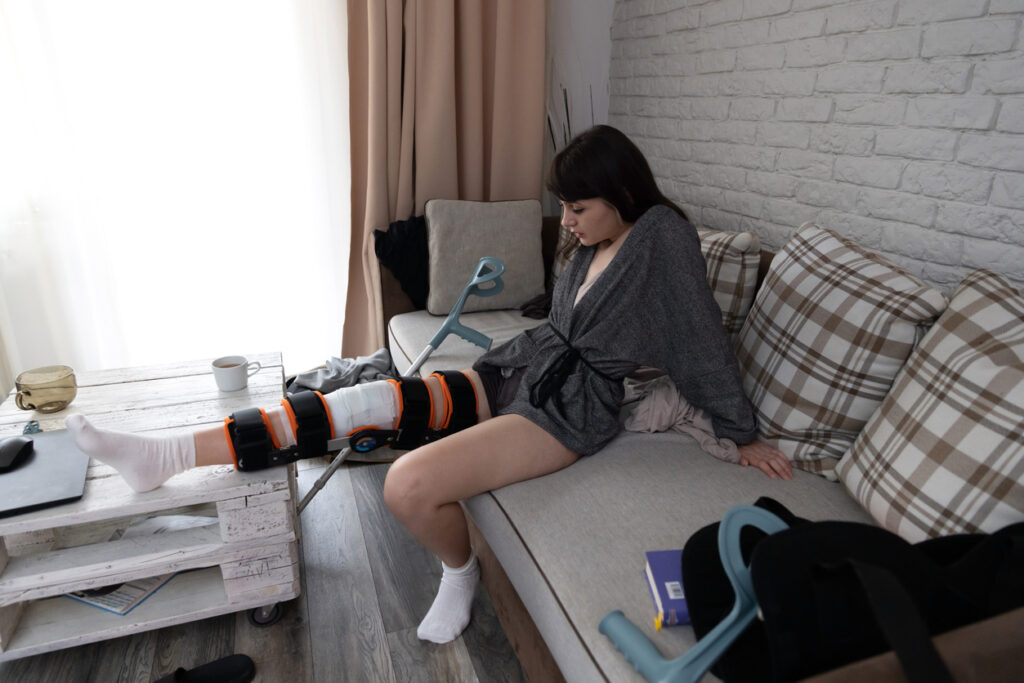
Person sitting on couch in full-leg brace after ACL repair

What Is the Anterior Cruciate Ligament (ACL)?

The ACL is one of the main ligaments that keep the knee stable. It prevents the shinbone from moving too far forward and supports rotational movement. ACL injuries often happen due to falls or direct trauma, especially during sports that involve jumping, pivoting, cutting, or sudden stops, such as basketball, soccer, football, skiing, and gymnastics.
Some patients can manage minor injuries with bracing and rehabilitation. However, complete ACL tears often lead to ongoing instability. Without treatment, the knee may continue to buckle during activity. This instability can increase the risk of cartilage damage and meniscus injuries over time.
ACL repair or reconstruction may be recommended if:
  • The knee feels unstable during movement.
  • You want to return to sports or exercise.
  • You have additional ligament or meniscus damage.
  • Physical therapy alone hasn’t improved function.
  • Your job requires physical activity or heavy movement.
Surgery can help restore your confidence when you move and reduce the risk of future knee damage. Many of our patients return to sports, exercise, and daily activities after completing their rehabilitation.

How ACL Repair Is Performed

ACL surgery is usually performed arthroscopically. Arthroscopy uses small incisions and a tiny camera to guide the procedure. This minimally invasive approach allows for greater precision and often leads to less tissue disruption.
Before surgery begins, you’ll receive anesthesia. Depending on your treatment plan, this may include general anesthesia or regional nerve blocks to help control your pain during and after the procedure.
The surgeon then inserts an arthroscope into your knee joint through small incisions. They’ll use specialized surgical instruments to remove damaged tissue and prepare the knee for reconstruction.
In most cases, the torn ACL is reconstructed rather than repaired directly. If so, your surgeon will replace the damaged ligament with a graft that acts as a new ACL. This graft could be a patellar tendon graft, a hamstring tendon graft, a quadriceps tendon graft, or a donor tissue graft.
After selecting the graft, your surgeon creates small tunnels in the thighbone and shinbone. The graft is carefully positioned within these tunnels to recreate the function of your original ACL. Your surgeon will then secure the graft in place using surgical screws or fixation devices. If your surgeon notices additional injuries, they may repair the meniscus or address cartilage damage during the same procedure.

Preparing for ACL Repair and Reconstruction Surgery

Preparation helps improve surgical outcomes and recovery. Before surgery, you’ll meet with your orthopedic team to review imaging, medical history, symptoms, and treatment goals. At Interventional Spine & Surgery Group, this process includes a physical examination, magnetic resonance imaging (MRIs) or X-rays, bloodwork, medication review, and pre-operative physical therapy. We often recommend physical therapy to strengthen the muscles around your knee, which can help improve your post-surgical recovery and mobility.
We’ll also give you detailed instructions before your surgery. While we’ll give you personalized guidance based on the type of procedure you’re having, you can generally expect the following:
  • Stopping certain medications temporarily
  • Avoiding food and drinks after midnight
  • Arranging transportation home
  • Preparing crutches or braces in advance
  • Setting up a comfortable recovery space at home
Our orthopedic team explains each step clearly, so you know what to expect before surgery day.

What Does Recovery Look Like After ACL Repair?

Recovery after ACL reconstruction happens gradually. Dr. Sean Lager performs both minimally invasive
and full repairs and replacements. Often, these are done on an outpatient basis, meaning you can return
home the same day. The first few days focus on controlling your pain, reducing your swelling, and
protecting your knee. Immediately after surgery, you may experience:

  • Swelling
  • Bruising
  • Temporary stiffness
  • Mild discomfort
  • Limited weight-bearing
Ice, elevation, medications, and compression can help you manage your symptoms during this early healing phase. We recommend that you use crutches or a knee brace temporarily for extra support. Often, you’ll start physical therapy soon after surgery. Rehabilitation is one of the most important parts of recovery because it helps restore your strength, flexibility, balance, stability, and range of motion.

Phases of Recovery

Recovery timelines vary depending on the patient, graft type, activity level, and whether additional injuries were treated. In general, rehabilitation progresses in phases:
  1. Early recovery phase: During the first several weeks, therapy focuses on reducing swelling and restoring movement. Patients gradually increase weight-bearing activity and improve walking mechanics.
  2. Strengthening phase: As healing continues, exercises target the quadriceps, hamstrings, and surrounding muscles that support knee stability.
  3. Advanced rehabilitation: Later stages include agility drills, balance work, and sport-specific exercises. Athletes often complete functional testing before returning to competitive activity.
Many patients return to light activity within a few months, but full recovery often takes six to 12 months. Returning to full activity too quickly can increase the risk of reinjury, so following your specific rehab plan is essential.

Follow-Up Care

Surgery is only the beginning. Consistent follow-up care is what drives your long-term success after ACL reconstruction. After your procedure, you can expect:
  • Post-op appointments: Your first follow-up is usually within one week of surgery. Your surgeon checks the incisions, reviews your pain management, and assesses your early healing.
  • Ongoing physical therapy: Physical therapy continues for several months. Your physical therapist works closely with your surgeon to adjust the program as you improve.
  • Imaging as needed: If there is concern about your healing progress, your surgeon may order additional imaging.
  • Return-to-sport clearance: Before resuming full activity, you will complete functional tests to confirm your knee is strong and stable enough. This protects you from re-injury.
  • Long-term joint health: Your care team will advise you on activity modifications, strengthening habits, and monitoring to help protect your knee for the long haul.
At Interventional Spine & Surgery Group, follow-up is never an afterthought. We track your progress from the first day of surgery through your return to full activity.

Meet Our Team

Dr. Sean Lager is a board-certified orthopedic surgeon at Interventional Spine & Surgery Group. He completed medical school at George Washington University School of Medicine, followed by an orthopedic surgery residency at State University of New York (SUNY) Downstate Medical Center. He later completed a sports medicine fellowship at Union Memorial Hospital.

Dr. Lager holds a subspecialty certification in Sports Medicine from the American Board of Orthopedic Surgery. His clinical focus includes arthroscopy, sports injuries, and traumatic orthopedic conditions affecting children and adults.

He has experience in treating athletes ranging from high school competitors to elite-level and professional athletes. During his fellowship, he worked with the Baltimore Ravens medical staff and served as a physician for Division I college teams.

Dr. Lager emphasizes minimally invasive techniques whenever possible. His personal experience as an injured athlete gives him a unique perspective on recovery and rehabilitation. He understands the physical and emotional challenges patients face after a knee injury, and he works closely with each patient throughout treatment.

Schedule an ACL Repair Appointment Near You in New Jersey

Choosing the right orthopedic team matters when dealing with an ACL injury. At Interventional Spine & Surgery Group, patients receive individualized care designed around their lifestyle, activity level, and recovery goals. With comprehensive support and fast, patient-centered care from your first appointment through the last, our specialists are here every step of the way.
Whether you’re an athlete hoping to return to competition or simply want to move without pain and instability, our team can help you explore your treatment options. We can see you now, we care, and we’ll help you get better. Schedule a consultation at one of our convenient locations near you in New Jersey to learn more about ACL repair and reconstruction.

Frequently Asked Questions About ACL Repair and Reconstruction

How do I know if I tore my ACL?

Common signs of a torn ACL include:

  • A popping sensation
  • Swelling
  • Instability
  • Pain
  • Difficulty bearing weight after a knee injury
Not always. Some patients can manage symptoms with rehabilitation and bracing. We often recommend surgery for active individuals or patients with significant instability.
Most procedures take about one to two hours, depending on the severity of the injury and whether additional repairs are needed.
Yes. Physical therapy is essential for rebuilding strength and improving your mobility and range of motion, so you can safely return to activity.
Many patients begin walking with crutches shortly after surgery. However, it may be several months before you can bear your full weight on your knee.
Many patients recover within six to 12 months.
Yes. Many athletes return to sports after completing rehab and passing strength and stability testing.
Untreated ACL tears can lead to chronic knee instability and increase the risk of cartilage damage and additional knee injuries over time.
How do I know if I tore my ACL?

Common signs of a torn ACL include:

  • A popping sensation
  • Swelling
  • Instability
  • Pain
  • Difficulty bearing weight after a knee injury
Is ACL surgery always necessary?

Not always. Some patients can manage symptoms with rehabilitation and bracing. We often recommend surgery for active individuals or patients with significant instability.

How long does ACL reconstruction surgery take?

Most procedures take about one to two hours, depending on the severity of the injury and whether additional repairs are needed.

Will I need physical therapy after ACL surgery?

Yes. Physical therapy is essential for rebuilding strength and improving your mobility and range of motion, so you can safely return to activity.

When can I walk after ACL surgery?

Many patients begin walking with crutches shortly after surgery. However, it may be several months before you can bear your full weight on your knee.

How long does full recovery take after ACL surgery?

Many patients recover within six to 12 months.

Can athletes return to sports after ACL reconstruction?

Yes. Many athletes return to sports after completing rehab and passing strength and stability testing.

What happens if I don’t treat an ACL tear?

Untreated ACL tears can lead to chronic knee instability and increase the risk of cartilage damage and additional knee injuries over time.

Scroll to Top
Seraphinite AcceleratorOptimized by Seraphinite Accelerator
Turns on site high speed to be attractive for people and search engines.