 Skip to content
Elbow Fracture
Elbow Fracture Care Near You in New Jersey
Key Takeaways
- Elbow fractures commonly occur after falls or direct trauma.
- Symptoms often include swelling, pain, bruising, and reduced mobility.
- While some fractures can heal on their own without surgery, more complex ones often require surgical stabilization.
- Recovery ranges from six weeks to several months, and physical therapy is often necessary.
- Interventional Spine & Surgery Group provides expert, multidisciplinary elbow fracture care at multiple locations near you in New Jersey.
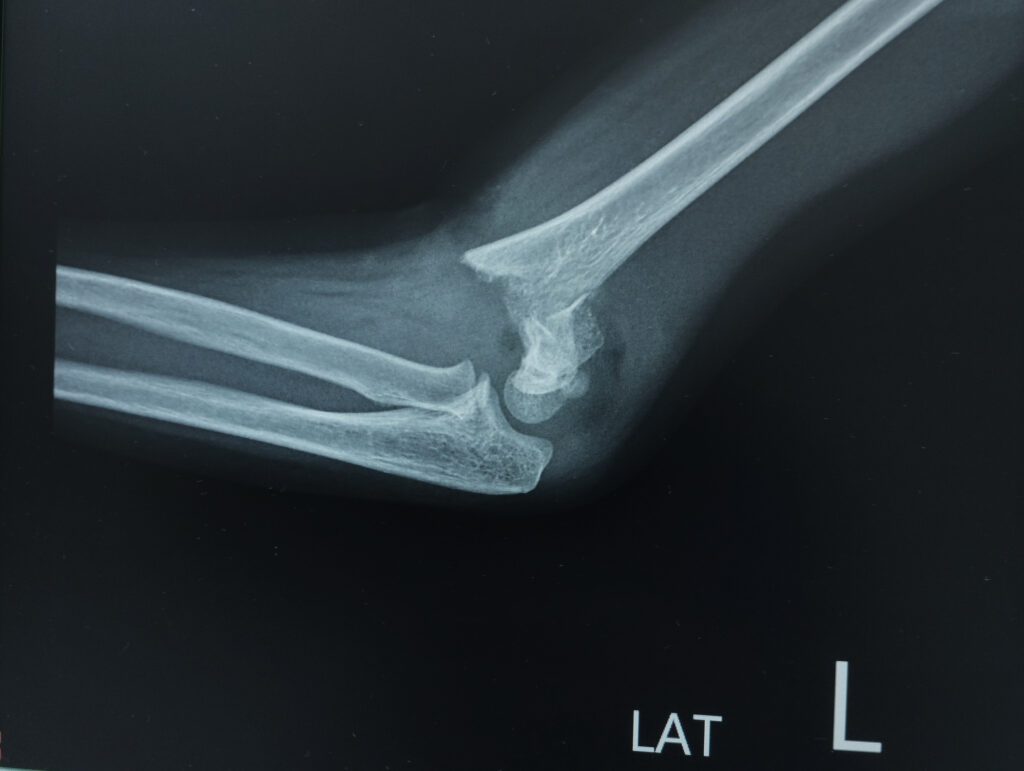
What Is an Elbow Fracture?
- Radial head fracture: This is the most common elbow fracture in adults, which is often caused by a fall on an outstretched hand.
- Olecranon fracture: This is a break at the bony tip of the elbow and often requires surgery.
- Distal humerus fracture: These breaks at the lower end of the upper arm bone near the elbow joint are common in older adults with osteoporosis and in children.
- Supracondylar fracture: These occur just above the elbow and are the most common pediatric elbow fracture. They carry a higher risk of nerve and blood vessel involvement.
Common Causes of Elbow Fractures
- Direct blows from contact sports, such as football, hockey, and wrestling
- High-impact accidents, such as motor vehicle collisions or bicycle falls
- Workplace injuries involving falls from ladders or heavy equipment
- Repetitive overuse stress, especially in throwing and racket sports like baseball and tennis
Activities and Factors That Can Increase Your Risk of an Elbow Fracture
- Children, especially those between the ages of five and 10, whose bones are not fully developed
- Older adults with osteoporosis or reduced bone density
- Athletes in contact sports, gymnastics, or martial arts
- Workers in construction, roofing, or other high-risk trades
- Anyone with a history of prior elbow injury or joint instability
- People with vitamin D or calcium deficiencies, which can weaken bones over time
Signs and Symptoms: When to Seek Care
- Intense pain at or around the elbow that worsens with movement
- Rapid swelling and bruising
- Stiffness or an inability to fully bend or straighten your arm
- A visible bump
- Numbness, weakness, or tingling in the forearm or hand
- A snapping or popping sensation at the time of injury
Diagnosing an Elbow Fracture
- Physical exam: Your doctor will look at your arm and elbow to find what parts are tender, assess the range of motion in your elbow, wrist, and shoulder, check for joint stability, and evaluate sensation and circulation in your hands and fingers. In children, the exam also looks to see if the injury includes the growth plate.
- Imaging and diagnostic tests: This helps your doctor confirm your broken elbow. Depending on what the exam involves, your doctor may order X-rays, a computed tomography (CT) scan, or a magnetic resonance imaging (MRI) scan.
Non-Surgical Treatment Options for Broken Elbows
- Splinting or casting: These immobilize the joint to allow the bone to heal correctly. You may have to wear a cast for three to six weeks.
- Sling support: If your fracture includes the radial head, you’ll be put in a sling. This allows you to move your arm a little bit to help prevent stiffness.
- Pain and inflammation management: Ibuprofen and ice can help control your swelling and pain as your elbow starts healing.
- Physical therapy and rehab: Once your elbow starts healing, rehab can help your elbow return to normal. These exercises focus on flexion, extension, and rotation, which can reduce stiffness.
Surgical Treatment Options
- The fracture is displaced, which is when the bone ends have shifted out of alignment.
- The cartilage is involved and needs to be reconstructed.
- The elbow is dislocated and fractured.
- Nerves or blood vessels near the fracture are at risk.
Why Choose Interventional Spine & Surgery Group?
Surgical patients are seen by Dr. Sean Lager, a board-certified orthopedic surgeon with fellowship
training in sports medicine. He treats the full range of orthopedic injuries, from complex elbow fractures
to total anterior cruciate ligament (ACL) tears, in both children and adults.
Our team takes time to explain what’s happening, answer questions thoroughly, and map out a realistic recovery plan. With us, every decision we make is focused on helping you recover fully and return to the activities you love. With fast access to our specialists, we can see you now, we care, and we’ll help you get better.
Dr. Lager prefers arthroscopic and minimally invasive techniques when they’re appropriate, and he
regularly attends surgical workshops to stay up to date with evolving techniques and technology. With
us, every decision we make is focused on helping you recover fully and return to the activities you love.
With fast access to our specialists, we can see you now, we care, and we’ll help you get better.
Find Elbow Injury Treatment Near You in New Jersey
Frequently Asked Questions About Elbow Fractures
A bruise causes localized tenderness and dislocation, but it doesn’t usually affect your range of motion. With a fracture, you’ll likely have sharp pain, immediate swelling, and stiffness. Imaging is the only way to get an accurate diagnosis.
- Your bones have shifted
- Your joint needs to be reconstructed
- Your elbow is also dislocated
- Your elbow hasn’t healed with conservative care.
Yes, especially in those between the ages of five and 10.
Sometimes. Certain fractures, such as hairline fractures, still allow limited movement. However, it may be painful.
Many elbow fractures heal in six to eight weeks. But it may take several months until you’re able to move it fully or return to full activity.
Seek immediate medical attention if you have severe deformity, numbness, pale fingers, bone protrusion, or an inability to move your arm.
