 Skip to content
Herniated Disc: Treatment, Symptoms, and Causes
What is a Herniated Disc?
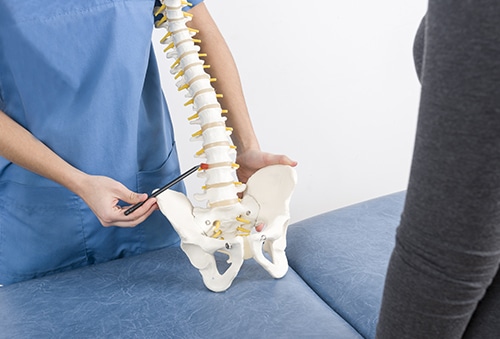
A herniated disc can cause neck or back pain and can affect any part of the spine, from the neck (cervical) to the mid back (thoracic) to the lower back (lumbar). Discs act as cushions and spacers between each vertebra to keep them from rubbing together and to give the spine flexibility and mobility. Discs have a tough, fibrous outer ring and a gel-like, elastic core. A herniated disc occurs when the nucleus pushes through the outer ring, creating a bulge that can press against nearby nerves.
Herniated Disc Symptoms
Depending on the location of the disc in the spine and the severity of the rupture, symptoms can vary. When symptoms are present, they can include severe pain, numbness or tingling, and weakness. When the herniated disc is in the lumbar region, symptoms can occur in the buttocks, legs, and feet. When the injury is in the cervical region, symptoms can spread to the shoulders, arms, and hands.
Herniated Disc Causes
Herniated discs can result from age-related wear and tear of the spinal discs, known as “disc degeneration.” A herniated disc can also result from a traumatic injury, such as an accident or improper lifting of a heavy object.
Herniated Disc Treatment Options
Treatment options for a herniated disc also depend on the location of the disc and its severity. A herniated disc can be treated with various non-surgical pain management techniques. If you’re experiencing additional or continuing symptoms, your doctor may recommend surgery, which can include minimally invasive procedures like a laminectomy, discectomy, and various spinal fusion procedures.
