 Skip to content
Sacroiliac Joint Dysfunction
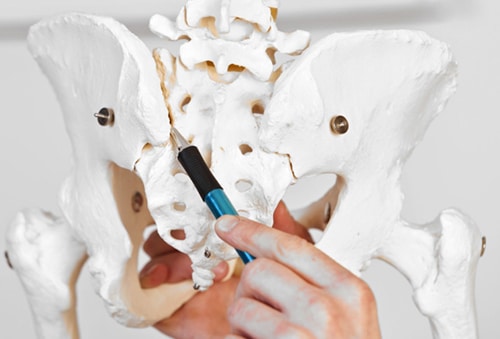
The sacroiliac joints connect your sacrum to your hip bones. The sacrum is a large, wedge-shaped vertebra between the lumbar spine and the tailbone, called the coccyx. On either side of the sacrum are the sacroiliac, or SI, joints. The SI joints are a critical part of the spine, acting as shock absorbers between the upper body and the pelvis and also enabling backward and forward bending. When the cartilage that covers these joints is damaged or wears out with age, the bones rub against each other, which can lead to sacroiliac joint dysfunction.
Sacroiliac joint dysfunction can manifest as pain in your buttocks, thighs, groin, and back. Additional symptoms can include instability, stiffness, or reduced range of motion in the pelvis and lower back, and increased pain when engaging in activities like climbing stairs or running.
Sacroiliac joint dysfunction is caused by damage to the cartilage surrounding the joints. This damage can be a result of degenerative diseases like arthritis; hormonal changes of pregnancy, which allow the ligaments of the SI joints to relax; injury to the lumbar spine; or infection of the joints.
Conservative treatments such as sacroiliac joint injections or pain medications may be recommended to treat the initial symptoms of sacroiliac joint dysfunction. If the SI joints do not respond well to non-surgical treatment, fusion surgery may be recommended to re-stabilize the joints and the lumbar spine.
