...

Fracture Revision & ORIF Surgery

Fracture Revision and ORIF Surgery Near You in New Jersey

Not every fracture heals the way it should. When a bone fails to heal correctly, fracture revision and open reduction and internal fixation (ORIF) surgery help support and stabilize the bone. At Interventional Spine & Surgery Group, we offer both procedures at locations near you across New Jersey. We prioritize fast access to care and offer a wide range of treatments, so you don’t have to live in pain or discomfort. Learn about our process, what these procedures are, and how our team takes a personalized approach to patient care.

Key Takeaways

  • Open reduction and internal fixation (ORIF) surgery realigns fractured bone and secures it with hardware like plates, screws, or rods.
  • Fracture revision surgery addresses bones that didn’t heal correctly after an initial injury or procedure.
  • Physical therapy and rehabilitation are an essential part of the recovery process.
  • Interventional Spine & Surgery Group offers comprehensive care for a variety of bone fractures across New Jersey.
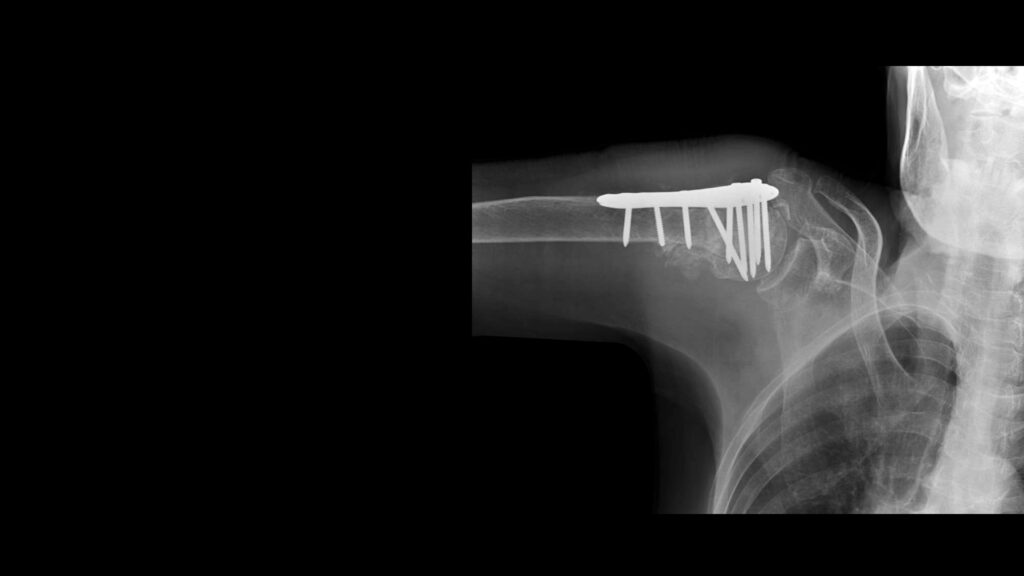
X-ray image of shoulder bone treated with ORIF surgery

Why Choose Fracture Revision and ORIF Surgery?

While bones are resilient, they don’t always heal on their own. Complex fractures involving multiple fragments, joint surfaces, or displacement often require surgical repair to help the bones stabilize and realign correctly. Without it, the bone may heal in the wrong position, not heal at all, or create long- term problems, such as ongoing pain or limited movement.
ORIF surgery allows orthopedic surgeons to reposition broken bones and stabilize them internally using surgical hardware. Likewise, when a bone hasn’t healed properly or when a prior surgery fails, fracture revision surgery can help. It addresses the underlying problem, such as nonunion (the bone failed to heal), malunion (the bone healed incorrectly), broken or loose hardware, or a fracture around a previous joint replacement.
These procedures help improve:
  • Bone alignment
  • Joint stability
  • Healing potential
  • Long-term function
  • Pain
  • Mobility and strength
By restoring proper alignment and stability, ORIF helps create the conditions needed for successful bone healing and recovery.

What Conditions Can Fracture revision and ORIF Surgery Treat?

Fracture revision and ORIF surgery address a range of fracture-related conditions. The most common include:
  • Displaced or unstable fractures: These are breaks in which bone fragments have shifted out of place.
  • Intra-articular fractures: These fractures extend into a joint surface, including the knee, ankle, wrist, hip, shoulder, or elbow.
  • Comminuted fracture: These are fractures with multiple bone fragments.
  • Periarticular fractures: These are fractures near a joint that can affect movement.
  • Nonunion: These are fractures that haven’t healed on their own.
  • Malunions: While these fractures may have healed, they aren’t in the correct place, which can cause pain or a visible deformity.
  • Hardware failure: This occurs when hardware from a prior surgery becomes broken, loosened, or infected.
  • Pathologic fractures: These fractures are caused by osteoporosis or tumors.
If you’re unsure whether your fracture or healing complication falls into one of these categories, you should schedule an evaluation with Interventional Spine & Surgery Group. Our team will review your imaging and history to determine what you’re dealing with and what treatment makes sense.

Preparing for Fracture Revision and ORIF Surgery

Once your surgeon has confirmed your treatment plan, your care team will walk you through everything you need to do ahead of your procedure. Your pre-operative process will typically include:
  • Getting a detailed consultation with your surgeon to review imaging, discuss the approach, and set expectations for recovery
  • Receiving updated X-rays or computed tomography (CT) scans to give your surgeon a clear picture of current bone alignment and any existing hardware
  • Getting pre-operative lab work and medical clearance, especially for patients with underlying health conditions
  • Stopping blood thinners, nonsteroidal anti-inflammatory drugs (NSAIDs), and certain supplements at least one week before surgery, as directed by your care team
  • Fasting for at least eight hours before your procedure if your doctor is using general or local anesthesia
  • Arranging for a driver and a support person for the first 24 to 48 hours post-surgery
  • Preparing your home recovery space
Use your pre-operative appointment to ask every question you have. When you understand what to expect and what’s expected of you, you’ll worry less, which makes the start of your recovery smoother.

How Fracture Revision and ORIF Surgery is Performed

Each technique varies based on the type of fracture, location, and whether there’s any prior hardware involved. However, most procedures have similar steps. For a primary ORIF procedure, the surgical process looks like this:
  1. Your surgeon makes an incision over the fracture site. This incision is large enough for them to see the bone and the surrounding structures.
  2. Your surgeon carefully moves the fractured bone segments back into place. This is known as open reduction.
  3. An X-ray technician will take X-rays to confirm that the bones are aligned correctly. Then, your surgeon will install internal hardware to keep your bones secure and stable. This internal repair uses plates and screws, intramedullary nails, tension band wiring, or a combination.
  4. The surgeon closes the incision and dresses it with a sterile bandage. They may apply a splint or brace to help immobilize and support the area as your bone heals.
During fracture revision surgery, the process is similar. However, your surgeon may need to take extra steps. For example, they may have to remove infected or broken hardware, debride scar tissue to expose healthy bone, take a bone graft, or cut the bone that healed incorrectly. These extra steps help ensure the bone is aligned correctly before repair.
Most procedures can be done in one to three hours. Your surgeon will give you a specific overview of your procedure during your pre-operative consultation. They’ll let you know if there’s anything that might make the surgery more complicated, such as prior infection, significant bone loss, or multiple prior surgeries.

Recovery After Fracture Revision and ORIF Surgery

Bone healing can’t be rushed. You need to let your bone take as long as it needs to heal correctly. While it may take some bones longer to heal, depending on the severity of the fracture, you can generally expect your recovery timeline to look something like this:
  • Weeks 1-2: Rest, elevation, and pain management are the priorities. You’ll have limited mobility, including braces and splints. If your fracture was in your leg or ankle, you’ll be using crutches to avoid putting weight on the injury.
  • Weeks 2-6: You’ll start gradually returning to activity, as directed by your doctor. You’ll begin physical therapy and gentle range-of-motion exercises to prevent stiffness.
  • Weeks 6-12: Your doctor will take images to see how well you’re healing. You may also start introducing strengthening exercises to your routine.
  • Months 3-6: You’ll start working on restoring full strength, flexibility, and normal movement. If you have a low-demand job, you may also return to work.
  • Months 6-12: It may take up to a year or longer for complex fractures to completely heal.
Physical therapy is an essential part of the recovery process. If you engage consistently with your rehab program, you’ll heal better and faster than those who don’t.

Follow-Up Care After Fracture Revision and ORIF Surgery

As you heal, your doctor will continuously monitor you. Your surgeon will schedule a series of post- operative visits to track your progress. This also allows them to look for any complications and fix them before they become bigger problems. Most follow-up schedules include:
  • A wound check and suture or staple removal at one to two weeks post-op
  • Imaging to assess early healing and whether you’re ready to start physical therapy at four to six weeks post-op
  • X-rays to assess whether your bone is healing enough to increase your activity level after three months
  • Final imaging and activity clearance at six months and beyond, if you had a complex fracture
Contact our office immediately if you have an increase in pain, swelling, or warmth at the surgical site between appointments. Additionally, reach out to us if there’s redness or discharge at the incision, you develop a fever above 101°F, your limb looks deformed, you can’t bear weight on your leg or ankle, or you have calf pain, leg swelling, or shortness of breath.

Why Choose Interventional Spine & Surgery Group?

Fracture revision and ORIF surgery require precision, experience, and a team that can manage your care from start to finish. At Interventional Spine & Surgery Group, that’s what you get. Our practice brings together orthopedic surgeons, pain management specialists, physical therapists, chiropractors, and neurosurgeons who collaborate on complex musculoskeletal cases every day.
Dr. Sean Lager is a board-certified orthopedic surgeon with fellowship training in sports medicine and extensive experience in fracture fixation and revision procedures. He approaches every case with the goal of restoring normal anatomy, protecting joint function, and giving the bone the best possible environment in which to heal. When your fracture is complex or a prior surgery or nonsurgical treatment didn’t work, he has the surgical skill and clinical judgment to determine the next step.
Our team ensures that patients with underlying conditions, such as osteoporosis, inflammatory arthritis, diabetes, prior infections, and more, receive coordinated care that accounts for every factor that may affect their healing. We treat the whole patient, not just fractures. We also aim to provide fast access to patient-centered care. With on-site imaging and a comprehensive array of treatments, we don’t make you wait to be seen and treated. Here, we can see you now, we care, and we’ll help you get better.

Find Bone Fracture Treatment Near You in New Jersey

A fracture that hasn’t healed the way it should isn’t something to wait on. The longer it goes without treatment, the more difficult it is to fix. At Interventional Spine & Surgery Group, we’ll start with imaging and a physical exam to assess the damage and then decide on whether you need a fracture revision or ORIF surgery. Contact us today to make an appointment at one of our convenient locations near you in New Jersey.

Frequently Asked Questions About Fracture Revision and ORIF Surgery

What is fracture revision surgery?
Fracture revision surgery corrects fractures that haven’t healed properly or have developed complications.
ORIF stands for open reduction and internal fixation. It repositions and stabilizes broken bones using plates, screws, rods, or other fixation devices.
Recovery timelines vary. Some patients recover within several months, while more complex injuries require longer rehabilitation.
Potential risks may include infection, bleeding, delayed healing, stiffness, hardware problems, nerve injury, or blood clots. Your surgeon will discuss your individual risk factors before surgery.
Signs of poor healing may include persistent pain, swelling, instability, deformity, delayed healing on imaging, or difficulty bearing weight.
Your doctor may recommend ORIF for fractures that are unstable, displaced, involve joints, fail to heal properly, or cannot heal with nonsurgical treatments.
You may experience temporary swelling, stiffness, and limited mobility. As these effects subside, you’ll begin physical therapy and follow-up monitoring.
ORIF is highly effective for many complex fractures, including hip, ankle, knee, and elbow. However, your doctor may recommend something else depending on fracture location, severity, bone quality, and your overall health.
What is fracture revision surgery?

Fracture revision surgery corrects fractures that haven’t healed properly or have developed complications.

What is ORIF surgery?

ORIF stands for open reduction and internal fixation. It repositions and stabilizes broken bones using plates, screws, rods, or other fixation devices.

How long does it take to recover from fracture revision surgery?

Recovery timelines vary. Some patients recover within several months, while more complex injuries require longer rehabilitation.

What are the risks of fracture revision surgery?

Potential risks may include infection, bleeding, delayed healing, stiffness, hardware problems, nerve injury, or blood clots. Your surgeon will discuss your individual risk factors before surgery.

What are the signs that my fracture hasn’t healed properly?

Signs of poor healing may include persistent pain, swelling, instability, deformity, delayed healing on imaging, or difficulty bearing weight.

How do I know if I need ORIF surgery?

Your doctor may recommend ORIF for fractures that are unstable, displaced, involve joints, fail to heal properly, or cannot heal with nonsurgical treatments.

What should I expect after fracture revision surgery?

You may experience temporary swelling, stiffness, and limited mobility. As these effects subside, you’ll begin physical therapy and follow-up monitoring.

Is ORIF surgery effective for all types of fractures?

ORIF is highly effective for many complex fractures, including hip, ankle, knee, and elbow. However, your doctor may recommend something else depending on fracture location, severity, bone quality, and your overall health.

Scroll to Top
Seraphinite AcceleratorOptimized by Seraphinite Accelerator
Turns on site high speed to be attractive for people and search engines.