 Skip to content
Runner’s Knee (Chondromalacia Patella): Causes, Symptoms, and Treatment Near You in New Jersey
If you’re an active person who is dealing with pain at the center of your knee, it may be due to chondromalacia patella, or runner’s knee. Fortunately, this common condition can be treated, usually without surgery. At Interventional Spine & Surgery Group, we are staffed by a multidisciplinary team that collaborates to provide fast, patient-centered orthopedic care and treatments, including runner’s knee treatment, near you in central and northern New Jersey. Learn more about this condition, its causes and symptoms, and how it’s diagnosed and treated.
Key Takeaways
- Chondromalacia patella, or runner’s knee, occurs when the cartilage on the underside of the kneecap starts to soften and degenerate over time, often due to overuse, muscle imbalances, or poor biomechanics.
- Symptoms of runner’s knee include dull, aching pain in the front of the knee, mild swelling, and clicking, grinding, or popping sounds.
- Runner’s knee is classified into four grades, based on how far the cartilage has broken down. Grade 1 is the mildest form, while grade 4 is the most severe.
- Most patients with runner’s knee experience effective symptom relief with non-surgical treatments like activity modification, medication, and physical therapy. However, in severe cases, surgical treatment may be required.
- Interventional Spine & Surgery Group provides patient-centered runner’s knee treatment near you in central and northern New Jersey.
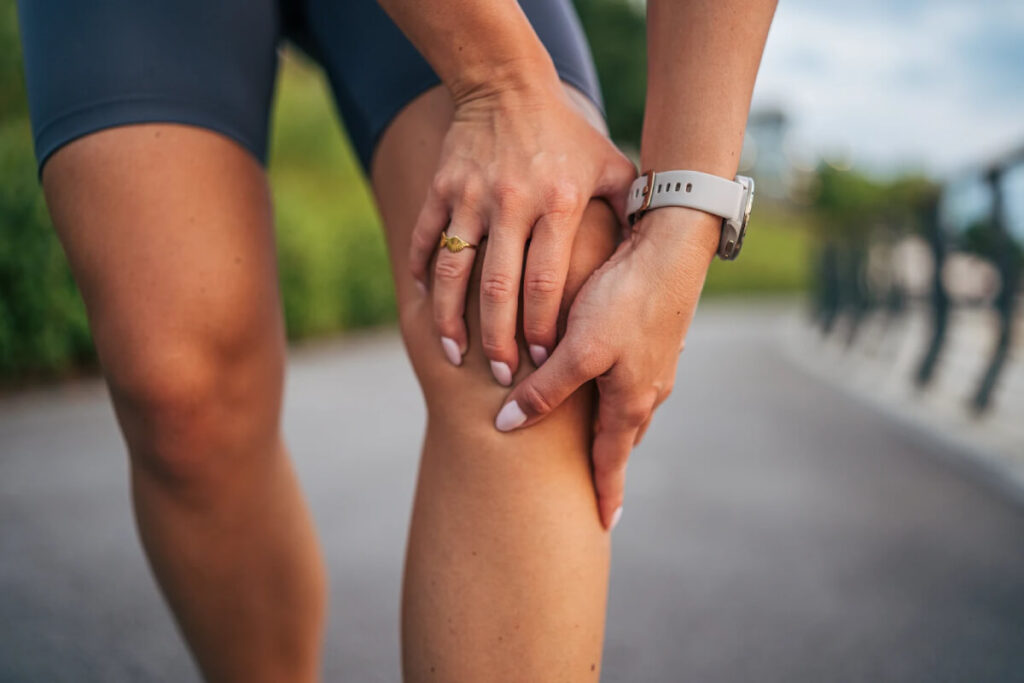
Understanding Chondromalacia Patella
In the knee joint, there are two types of cartilage: articular cartilage that helps reduce friction and spread joint loads evenly, and the meniscus, which helps absorb shock from impacts. They cover the joint surfaces to enable smooth movement and shock absorption.
When the articular cartilage on the underside of the kneecap starts to soften and degenerate over time, it increases friction and causes dull pain on the front of the knee. This is known as chondromalacia patella, runner’s knee, or patellofemoral pain syndrome. These terms are often used interchangeably, but they have slight differences.
Runner’s knee is a more general term for several repetitive overuse injuries in the knee, including IT band syndrome, while chondromalacia refers to the physical softening and breakdown of cartilage under the kneecap. Patellofemoral pain syndrome describes anterior pain located directly around or behind the kneecap.
The kneecap is especially vulnerable to these conditions because it takes a large amount of mechanical stress every day. The cartilage in the area also doesn’t have a strong blood supply, which affects its healing ability.
What Are the Causes and Risk Factors of Runner’s Knee?
Although the condition is called runner’s knee, it is not only caused by running. There are several causes, which include:
- Overuse: If you perform repetitive high-impact movements, like bending, jumping, or running, the knee joint gets strained, and the structures get worn down.
- Muscle imbalances: People with weak quadriceps or hip stabilizers often have misaligned kneecap tracking, which causes the kneecap to rub against the thigh bone groove and wears down the cartilage.
- Tight muscles: Individuals with tight hamstrings or Achilles tendons put abnormal tension on the lower leg and knee, which pulls the kneecap out of alignment and increases friction.
- Poor biomechanics: Those who have abnormal foot pronation (rolling inward), flat feet, or knees that collapse inward during movement experience increased joint load, which can wear the cartilage down over time.
Certain risk factors also put a person at a higher risk of developing runner’s knee. They include being female (due to a wider pelvis), being younger (teen/young adult), wearing unsupportive footwear, and rapidly increasing training intensity without adequate conditioning. Runner’s knee is common in athletes or runners, but it can also happen to people who don’t play sports.
What Are the Symptoms of Runner’s Knee?
Runner’s knee can cause several symptoms that impact a person’s ability to fully enjoy the activities they love. They include:
- A dull, aching pain in the front (anterior) of the knee
- Clicking, grinding, or popping sounds when bending or straightening the leg (crepitus)
- Mild swelling
- Stiffness
The pain may worsen with certain activities, such as walking down stairs or a hill, sitting for a long time with bent knees, and squatting, kneeling, or standing up.
What Are the Grades of Runner’s Knee?
Runner’s knee is categorized into four grades, based on how far the cartilage has broken down. The mildest grade is 1, while the most severe grade is 4. The grade helps to determine the best treatment option.
| Grade | Grade 1 | Grade 2 | Grade 3 | Grade 4 |
|---|---|---|---|---|
| Description | Mildest form | Moderate form with early signs of surface wear | Moderate/severe form where the cartilage starts to thin | Most severe form |
| Cartilage Damage | Soft or swollen cartilage with no tearing or erosion yet | Beginning of tissue erosion | Active deterioration and partial loss of tissue | Significant cartilage is gone and the bone is exposed, causing significant pain |
| Treatment Approach | Rest, R.I.C.E. method, OTC medications | Rest and activity modification, R.I.C.E. method, OTC medications, physical therapy | Rest and activity modification, R.I.C.E. method, OTC medications, bracing or taping, physical therapy | Activity modification, bracing or taping, physical therapy, and sometimes, surgical procedures |
How Is Runner’s Knee Diagnosed?
When a patient presents with symptoms of runner’s knee, they will need to go through a diagnostic process to confirm the condition and rule out other possibilities. It typically includes:
- Physical exam: The exam will start with a discussion of your medical history, symptoms, related conditions, and more. The doctor will examine the knee joint to check for pain and swelling and assess its strength and mobility. They may also ask you to do some movement tests to see if they trigger the pain.
- Imaging scans: The doctor will also order imaging scans to visualize the joint and its soft tissues. Common options include magnetic resonance imaging (MRI) to see the soft tissue and X-rays to look for bone or joint damage.
Using the results from the physical exam and imaging scans, the doctor can confirm a diagnosis of runner’s knee and start developing a treatment plan.
How Is Runner’s Knee Treated?
Runner’s knee usually is treated with non-surgical options, although surgery might be recommended in some instances, depending on the specific patient’s condition.
What Are the Non-Surgical Treatment Options for Runner’s Knee?
Most cases of runner’s knee can heal effectively with conservative, non-surgical treatment methods. They include:
- R.I.C.E. method: Many doctors recommend at-home care for mild cases using the rest, ice, compression, elevation (R.I.C.E.) method. It helps to reduce pain and inflammation.
- Activity modification: If you participate in high-impact activities, you may need to limit them until the pain subsides. You may also be recommended to switch to low-impact exercises and limit certain activities that cause increased pain.
- Anti-inflammatory medications: To manage pain and swelling, you can take over-the-counter nonsteroidal anti-inflammatory drugs (NSAIDs) like ibuprofen.
- Support devices: Wearing specialized patellar tape, a supportive knee brace, or orthotic shoes can help steady your kneecap and prevent misalignment that can aggravate runner’s knee.
- Physical therapy: Physical therapy is a key part of treating runner’s knee. Using targeted exercises that focus on strengthening the hips, glutes, and quads, PT helps remove excessive stress on your kneecap. It can also help improve your flexibility, fix muscle imbalances, and prevent poor alignment.
These treatments are often combined to address pain, promote healing, and prevent re-injury. The vast majority of patients will recover with these non-surgical methods.
What Are the Surgical Treatment Options for Runner’s Knee?
Although most cases of runner’s knee are treated non-surgically, some severe cases require surgical treatment. Reasons surgery may be recommended include:
- Conservative treatments have failed for six or more months.
- The knee has severe structural misalignment.
- The knee has majorly damaged cartilage that is causing severe locking or catching.
If a patient is experiencing any of the above, a surgical procedure called chondroplasty may be performed. It is a minimally invasive procedure that involves trimming, smoothing, and reshaping damaged or frayed joint cartilage. It is most often performed via arthroscopy, which uses tiny incisions and small instruments, including a camera. The main purposes of this procedure are to provide pain relief, reduce catching or locking in the joint, and prevent further deterioration.
Find Runner’s Knee Treatment Near You in New Jersey
Don’t let runner’s knee keep impacting your daily life – treatment is available at Interventional Spine & Surgery Group. Our experienced team includes orthopedic surgeons, neurosurgeons, physical therapists, chiropractors, and more who work together to provide fast access to high-quality care.
Dr. Deramo, a board-certified orthopedic surgeon with experience in sports medicine, performs our orthopedic procedures. He stays up to date on new techniques and aims to use minimally invasive methods whenever possible. Whether a patient’s runner’s knee requires surgery or not, Dr. Deramo will provide compassionate, comprehensive care.
At Interventional Spine & Surgery Group, we aim to see patients as quickly as possible, often within 24 to 48 hours. We can see you now, we care, and we’ll help you get better. To learn more about chondromalacia patella or to book an appointment near you in central or northern New Jersey, contact us today.
Frequently Asked Questions About Runner’s Knee
What is chondromalacia patella?
Chondromalacia patella is a condition that occurs when the cartilage under the kneecap softens and breaks down over time, causing dull pain in the front of the knee. It is often called runner’s knee.
What does chondromalacia patella pain feel like?
Chondromalacia patella pain generally feels like a dull, aching discomfort in the front of the knee or behind the kneecap. It may worsen when going down the stairs, sitting with bent knees, or squatting.
Can runner’s knee be cured?
Yes, runner’s knee can be cured, often with conservative treatment methods like rest, activity modification, physical therapy, and bracing.
Is chondromalacia the same as runner's knee?
Although the terms are often used interchangeably, there is technically a difference between the two. Chondromalacia refers to the physical softening and breakdown of cartilage under the kneecap, while runner’s knee is a broader term for anterior knee pain that may or may not involve visible cartilage damage.
What exercises are bad for chondromalacia?
Exercises that are bad for chondromalacia include high-stress movements like deep squats, lunges, and leg extensions on a machine. This is because they put too much stress on the kneecap. High-impact activities like running, sprinting, jumping, and contact sports should also be avoided during the healing process.
Does chondromalacia show up on MRI?
Yes, chondromalacia shows up on a magnetic resonance imaging (MRI) scan, which allows doctors to visualize cartilage softening, thinning, and tears.
How long does runner’s knee take to heal?
It depends on the severity. Mild cases typically take two to four weeks, moderate cases take four to eight weeks, and severe cases can take three months or more.
When does runner’s knee require surgery?
Most cases of runner’s knee don’t require surgery. However, it may be considered if conservative treatments have failed for many months, there is severe structural misalignment, or there is significantly damaged cartilage that is causing severe locking or catching sensations.
